The cortisol-sleep loop.
Cortisol is your body's stress hormone. It peaks in the morning to wake you up and should fall in the evening to let you sleep. But modern stress — deadlines, caregiving, screens, social pressure — keeps cortisol elevated long after the sun goes down.
When cortisol is high at night, your brain interprets it as a signal to stay alert. So your body is exhausted, but your nervous system thinks it still needs to be on. That is the exact pattern that makes you fall asleep on the couch, then wake up the second you get in bed.
Why melatonin doesn't fix it.
Melatonin tells your body what time it is. It does not calm a stress response. If your cortisol is elevated, melatonin may make you drowsy for a few hours, but it won't stop the 2am wake-up or the racing thoughts.
For some women, melatonin also causes next-day grogginess, vivid dreams, or a dependency on higher doses over time. That's because it is addressing a timing problem when the real problem is stress.
How to calm the stress response before bed.
The most effective approach is to target cortisol directly. Certain botanicals and amino acids have been studied for their calming effects on the nervous system:
- 01Reishi mushroom — traditionally used to support the body's stress response and recovery.
- 02L-Theanine — an amino acid that promotes relaxation without sedation.
- 03Lemon Balm — works on the GABA pathway to signal calm.
- 04Passionflower and Valerian — gentle botanicals that ease the body into sleep.
What to expect from a cortisol-first sleep gummy.
The first night, most women notice their mind is quieter. Not knocked out — just not racing. By the third or fourth night, falling asleep takes less time. By the second week, the morning fog starts to lift because the sleep is actual recovery, not forced sedation.
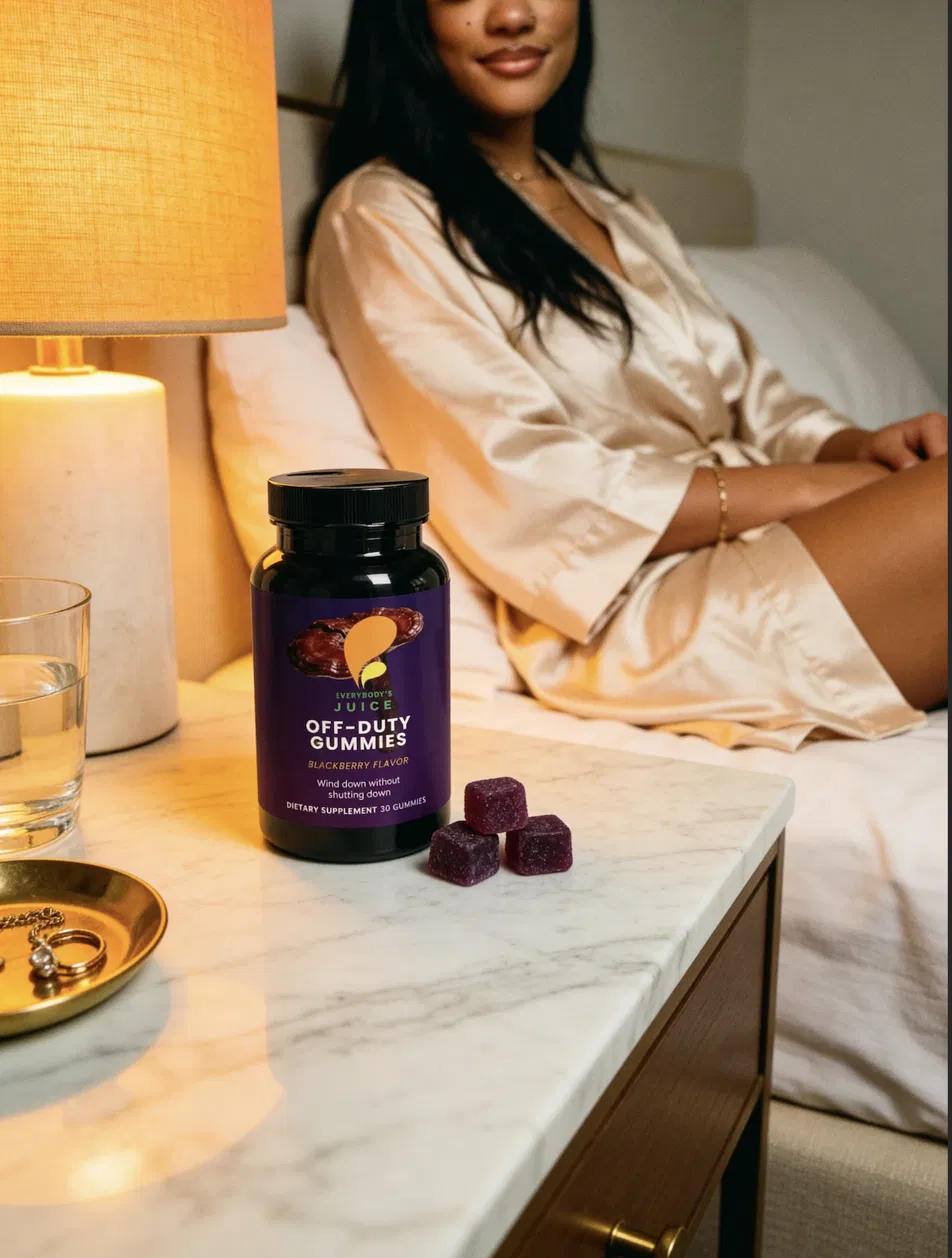
That's the difference between a sleep aid and a nervous system reset. Off-Duty is built for the second one.